
- Will Rebeca Grynspan be the next Secretary-General of the United Nations?50¢50 %
- Will Rafael Grossi be the next Secretary-General of the United Nations?19¢19 %
- Will Olara Otunnu be the next Secretary-General of the United Nations?12¢12 %
- Will Carolyn Rodrigues-Birkett be the next Secretary-General of the United Nations?10¢10 %
- Will Lana Nusseibeh be the next Secretary-General of the United Nations?10¢10 %
- Will Viktor Orbán be the next Secretary-General of the United Nations?7¢7 %
- Will María Fernanda Espinosa be the next Secretary-General of the United Nations?7¢7 %
- Will Macky Sall be the next Secretary-General of the United Nations?2¢2 %
- Will Michelle Bachelet be the next Secretary-General of the United Nations?1¢1 %
- Will Ivonne de Baki be the next Secretary-General of the United Nations?<1¢<1 %
 3 %49,5 %Rebeca GrynspanObjem 41,5 tis. $
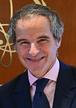 3 %19,1 %Rafael GrossiObjem 40,6 tis. $
 2 %12,2 %Olara OtunnuObjem 3,5 tis. $
 4 %9,8 %Carolyn Rodrigues-BirkettObjem 7,2 tis. $
 1 %9,5 %Lana NusseibehObjem 5,8 tis. $
 5 %6,8 %Viktor OrbánObjem 10,5 tis. $
 6,6 %María Fernanda EspinosaObjem 12,5 tis. $
 1,7 %Macky SallObjem 131,7 tis. $
 1,3 %Michelle BacheletObjem 12,5 tis. $
 0,2 %Ivonne de BakiObjem 2,8 tis. $
Rebeca Grynspan leads the race for the next United Nations Secretary-General, with recent Security Council straw polls showing her extending support to 12 encourage votes and three discourage in the November 5 round. As the Costa Rican nominee and current head of UN Trade and Development, her positioning aligns with the informal regional rotation favoring Latin American and Caribbean candidates, alongside her multilateral experience and broad diplomatic backing. Rafael Grossi of Argentina, Director General of the International Atomic Energy Agency, holds second place with nine encourage votes, while Guyana’s Carolyn Rodrigues-Birkett and the UAE’s Lana Nusseibeh follow with eight and seven, respectively. The process requires at least nine Security Council votes without a permanent member veto before General Assembly confirmation, with António Guterres’ term ending December 31, 2026. Multiple rounds of closed-door polling continue to shape trader assessments of viable paths forward.
Pravidla
A selection process is currently being held to choose the next Secretary-General of the United Nations, with the current term set to end on 31 December 2026. This market will resolve to the individual who is formally appointed as Secretary-General of the United Nations following the 2026 United Nations Secretary-General selection. To count for resolution, the individual must be formally appointed as Secretary-General of the United Nations following the 2026 United Nations Secretary-General selection. A recommendation by the United Nations Security Council alone will not be sufficient for resolution. Any interim or caretaker Secretary-General will not count toward the resolution of this market. If no such Secretary-General is appointed by June 30, 2027, 11:59 PM ET, this market will resolve to “Other”. The primary resolution source for this market will be official information from the United Nations; however, a consensus of credible reporting may also be used.